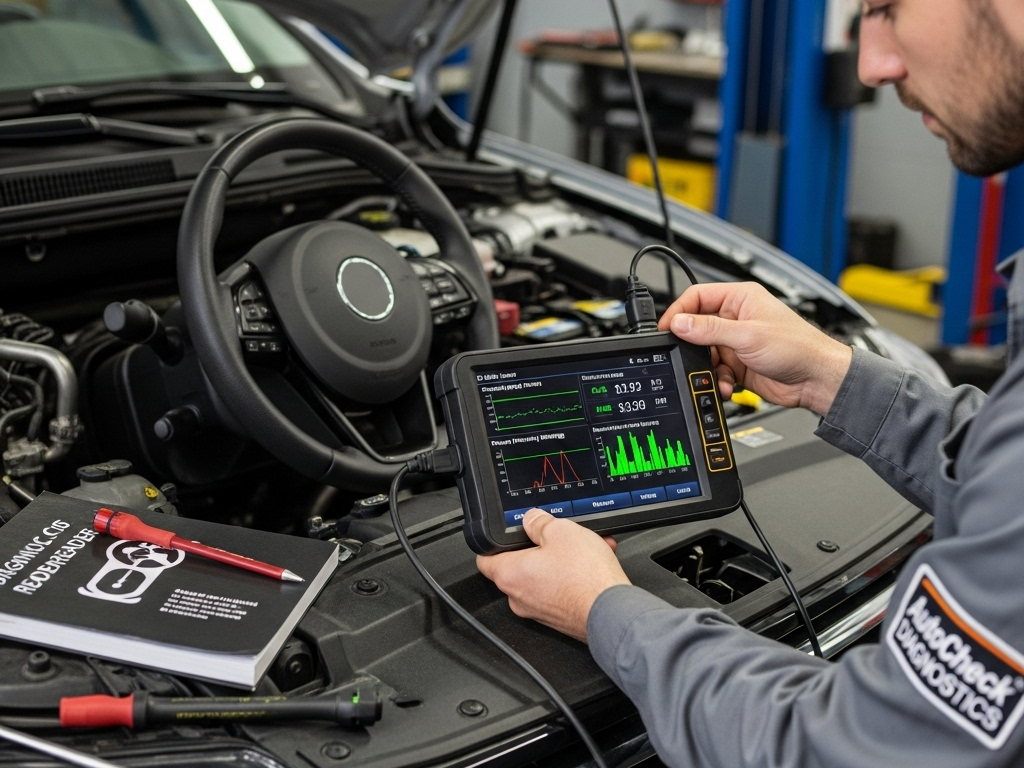
Why does managing tpms frequency europe asia us matter when centralizing TPMS sourcing globally?

Kicking off
Each growing intricacy among state-of-the-art motorcars obliges a thorough comprehensive familiarity of diagnostic methods, particularly regarding On-Board Diagnostics II (OBD2) and Tire Pressure Monitoring Systems (TPMS). Throughout Europe, Asia, and the US, these functionalities function using different frequencies. OBD2 standards are largely unified globally, mainly utilizing ISO 9141-50, KWP2000, CAN, and others, but regional applications can pose minor differences. TPMS, however, is where significant frequency discrepancies arise. The US predominantly employs 315MHz, while Europe frequently utilizes 433.92MHz, and Asia exposes a more multifaceted range including both frequencies and further bands. Accordingly, exact diagnostic instruments must be outfitted with the capability to comprehend these plentiful frequencies to allow effective problem-solving and maintenance.
Breaking down TPMS Sensor Frequencies: A Global Guide (Europe, North America, Asia)
Comprehending rubber surveying apparatus (TPMS) module frequencies within the domain remains challenging. Generally, North lands largely utilize 315 MHz, though some newer vehicles exploit 433 MHz. On the other hand, Europe and most of Asia mostly serve on the 433 MHz waveband, with some area variations existing chiefly in select Asian countries. Accordingly, essential to verify the true signal prior to securing TPMS modules to validate alignment and prevent imminent complications.
EV System Scanners: OBD2 Compatibility and TPMS Integration
Modern electrified auto evaluation equipment are increasingly combining critical functionality, notably concerning both conventional On-Board Diagnostics II (OBD2) support and Tire Pressure Monitoring System (TPMS) combination. Numerous non-gasoline vehicles utilize OBD2 ports for collecting key system statistics, allowing technicians and custodians to locate prospective errors. Furthermore, integrated TPMS inclusion provides accurate tire tension reports, assisting to amplified safeguarding and power performance. This combination of OBD2 interfaces and TPMS deployment represents a substantial enhancement in EV automobile evaluation.
Tire Monitoring Frequency Variations: Western Europe vs. North American Zone vs. The East - A Comprehensive Evaluation
Such platforms responsible for watching tire stress—TPMS—operate on separate radio spectrum, leading to considerable regional discrepancies. North America predominantly utilizes 315 MHz, though some modern vehicles are shifting to 433 MHz. Continental Europe mandates 433.92 MHz, a designated frequency to validate interoperability across jurisdictions. Far East exhibits a fragmented landscape, with selected states using 315 MHz, others 433 MHz, and still diverse zones employing a mix of both. This inconsistency creates challenges for workshops and automobile holders when dealing with replacement TPMS units or diagnostic machinery, mandating careful verification of regional specifications to avoid problems and guarantee proper operation of the TPMS.
OBD2 Scanners for Battery-Powered Autos: Tire Info Examination & Radio Wave Breakdown
Cutting-edge automotive readers are quickly growing to accommodate EV vehicles, mainly with respect to wheel pressure monitoring examination. Unlike middle combustion rides, electrified autos present individual issues when it comes to tire data diagnostics. Many EVs use distinct tire data devices transmissions requiring the tool to accurately interpret the frequency in use. This potential grants specialists to just read inflation levels but also trace the specific frequency being dispatched by the pressure system units, contributing in exact identification of defects.
Asia Tire Monitoring Wavelengths: Which Ought to Recognize?
Dealing with the world of car TPMS can be a puzzle, primarily due to the varying signals utilized across Western Europe, Asia, and the United States. Continental vehicles predominantly use 433.92 MHz, while countless Asian countries employ 315 MHz and 433.92 MHz, creating a challenging situation for technicians. In the US, both 315 MHz and 433.92 MHz are normal, with 315 MHz being more popular. Thus, understanding these regional variations is indispensable for accurately addressing TPMS deficiencies and selecting the suitable programming tools.
Developing an Groundwork: Vehicle Diagnostics, Electronically Powered Automobiles, in addition to Tire Monitoring Module Rate Determination
For skilled transport vehicle mechanics, purely absorbing this core concepts with respect to OBD2, electrified transport systems, combined with pressure monitoring systems device broadcast detecting represents one decisive upcoming stage. That arenas explore into routine methods, entailing particular tools plus experience with the aim of rightly spot or repair complicated complications associated with auto wheel management, battery architecture operation, even motor fault alerts. In addition, appropriately isolating tire information transmitter signals – usually diverge during separate labels including generations – sometimes vital to flawless alignment.
Battery-Powered Vehicle Testing: Using OBD2 Scanners to Troubleshoot TPMS
Dealing with Tire Pressure Monitoring Systems tire sensor networks in electric vehicles electrified transports often demands more than merely visual inspection. Modern OBD2 readers offer the ability to access TPMS data and diagnose potential malfunctions. Utilizing these apparatuses, technicians can decode fault codes, survey sensor health, and even implement sensor inspections, allowing for rapid diagnosis of pressure detection problems and minimizing outage periods. It is is especially important given the widespread complexity of EV systems.
Comprehending Tire Pressure Monitoring Systems Waves: A Practical Tutorial for Eurozone, the East, and the US & Canada
Adequately managing tire sensors across Continental Europe, Asia-Pacific, and North America involves a comprehensive understanding of the fluctuating wireless spectrums they engage. Contrary to a standardized system, various locations usually employs specific ranges. For instance Eurozone mostly counts on 315 MHz band and 433 million nine hundred twenty kHz, while North American Region commonly relies on 315 MHz tpms frequency europe asia us even though some late models can embrace 433.92 MHz frequency. Far East presents a broader variety outlook, with various spectral regions being employed, contingent upon the area and car brand.
- Reflect on area guidelines regarding tire sensor signal.
- Check your car operating manual for exact signal.
- Apply a gauge reader capable of reading diverse signals.