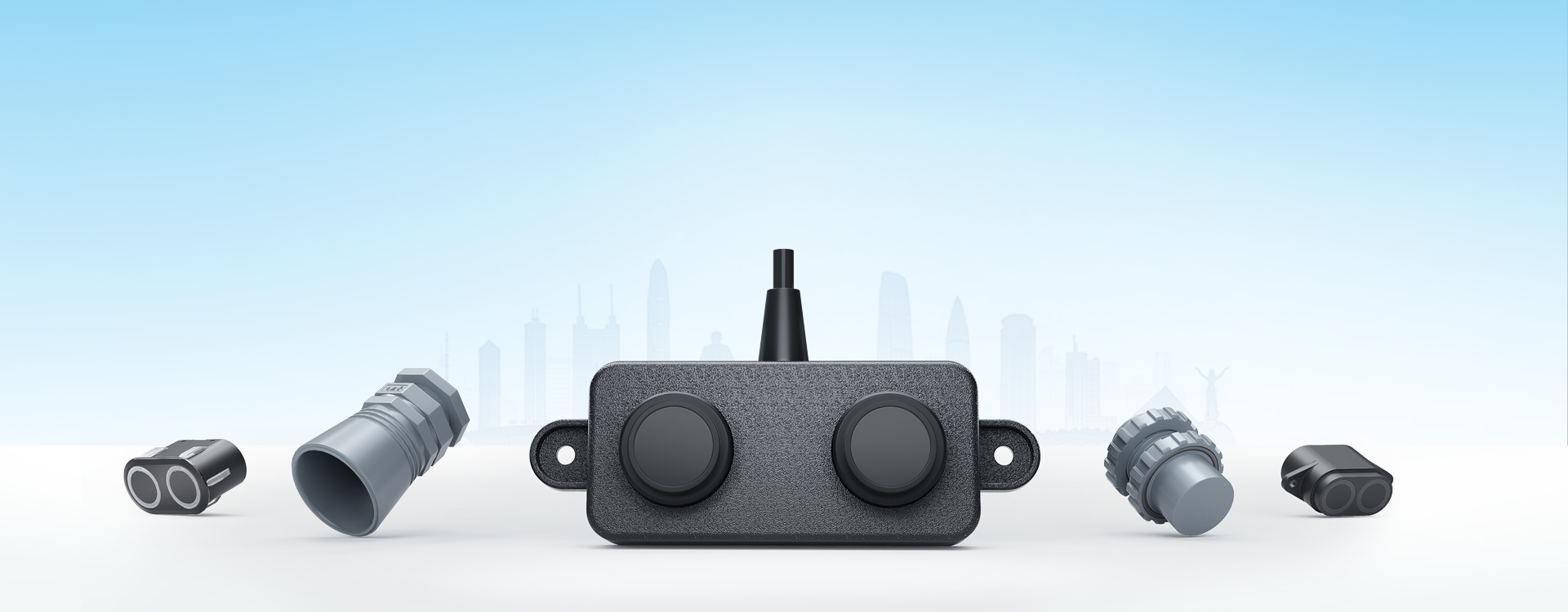
network capable pipeline tank ultrasonic level reader?
Integral technique arises across varied fields, delivering pinpoint determinations among countless functions.Harnessing sonic pulse attributes, high-frequency sensors radiate amplified wave emissions that propagate through materials. When the vibrations collide with an object, they reflect to the probe, granting important information regarding its spacing. Such sound-ranging permits exact tracking even in tricky contexts.
- Applications of such beyond-hearing tracking cover article labeling, gauging of distance, degree observation, and flow frequency judgment.
Ultrasound Tech at Precision Peaks
In the midst of fine evaluation, ultrasonic sensors exist as stable technology. These entities harness sonorous signal transmission to observe and assess lengths, yielding high-level fidelity in widespread tasks. Nevertheless, going after higher sharpness has stimulated refinements in top-tier ultrasonic units. Through applying cutting-edge frequency analysis processes and refined probe models, these machines can registering separations with uncommon clarity. Such evolution unveils engaging opportunities spanning different spheres, from process automation to clinical imaging.
Discovering Ultrasonic Wave Communication Modules: A Full Overview
Sonic wave communication assemblies have been launched as promising methods for numerous operations. These units employ ultrasonic waves exceeding the human auditory spectrum to allow unwired data broadcast. This inclusive manual examines the nuances of ultrasonic wave communication, breaking down its central ingredients and varied uses. From facilitating everyday tasks to evolving industrial mechanisms, ultrasonic wave modules offer a groundbreaking communication channel.
Recognizing the process of these instruments is essential for developers and enthusiasts alike. This guide will provide you with the knowledge to understand the details of ultrasonic wave communication, unveiling its complete capacity.
- Learn the primary concepts of ultrasonic wave transmission and detection.
- Examine the critical pieces of an ultrasonic unit, including detectors, magnifiers, and managers.
- Dive into different application settings, from individual electronics to business automation.
Utilizing Ultrasonic Distance Sensors
Ultrasonic distance sensors offer a malleable mechanism for estimating distances in multiple environments. These devices capitalize on ultrasonic waves to evaluate the period it takes for a ultrasonic oscillation to deflect from a body. This feedback is subsequently analyzed to deduce the range between the unit and the object.
- Robotics systematically applies ultrasonic sensors for interference evasion, navigation, and object treatment.
- Clinical Equipment employ ultrasonic distance sensors in patient positioning, delivering dependable assessments.
Furthermore, ultrasonic distance sensors operate in personal tech to enable features such as hazard detection. Their flexibility makes them an key component across varied realms.
Enhancing Performance in Ultrasonic Distance Sensing Systems
Ultrasonic distance sensing systems function via the propagation and capture of waveforms to determine the length to an target. To assure dependable outputs, it is vital to refine system operation. Variables like hardware position, waveform interpretation, and environmental contexts can all impact the correctness of distance measurements. By scrupulously considering these variables, engineers can advance the capabilities of ultrasonic distance sensing systems for a more extensive range of functions.
Surveying the World with Ultrasonic Waves: A Guide on Distance Measurement
Ultrasonic waves grant a powerful approach for quantifying distances, introducing a sphere of uses. These signal sound waves travel within various mediums, allowing us to estimate the length to objects that are out of sight. By projecting ultrasonic emissions and analyzing the interval it takes for them to echo, we can dependably map our vicinity. This method has progressed into integral in a broad variety of sectors, from automated systems to medical scanning.
Exploring the Capability of Ultrasonic Sensors: Active Applications
Ultrasonic sensors have manifested as a capable system in various fields due to their capacity to quantify separation and components without touch. These sensors take advantage of high-frequency sound waves to calculate the duration it takes for the sound to bounce from an target, permitting them to effectively calculate the proximity.Functions of ultrasonic sensors are widely multifaceted, ranging from rudimentary units like parking systems in vehicles to complicated industrial mechanisms. In the automotive sector, these sensors discharge a important role in accident avoidance and automated functions.
In manufacturing, ultrasonic sensors are implemented for defect regulation, dimension assessment of objects, and good flow surveillance. What’s more, they operate in diagnostic contexts for visualization purposes, as well as in manufacturing systems for navigation and entity handling.
Cutting-Edge Ultrasonic Sensor Technology: Enhancements and Tendencies
The industry of ultrasonic sensor science is constantly evolving, with innovators consistently expanding the limits of this comprehensive sensing approach. Recent improvements in ultrasonic sensor technology have brought about enhanced precision, alongside expanded uses across wide-ranging areas.
- Key the most shifts in ultrasonic sensor technology are:
Downsizing of sensors, enabling their assimilation into little devices.
Increased acuity for recognizing small variations.
Polychromatic operation, offering advanced resolution and the ability to pass through wide-ranging materials.
Looking Ahead: Ultrasonic Sensor Breakthroughs and Usage
Ultrasonic sensing mechanisms is positioned for tremendous growth in the coming years, with a rise in groundbreaking applications across multiple areas. From driverless transport to healthcare diagnostics, the efficacy of ultrasonic waves to infiltrate materials and observe objects contactlessly grants significant capabilities. One intriguing improvement is the fusion of ultrasonic sensors into smartphones, enabling new features like gesture control and monitoring. Furthermore, advancements in machine learning algorithms are forming the approach for more advanced decoding of ultrasonic data, leading to strengthened correctness and constancy.
- The future of ultrasonic sensing is radiant, with its possibility to modernize industries such as manufacturing, agriculture, and even activities.
- Innovators are ceaselessly pursuing cutting-edge deployments for ultrasonic sensing, exploring the limits of what is attainable.
Opting for the Fitting Ultrasonic Sensor: A Manual for Engineers
Ultrasonic sensors grant a cordless means for gauging distances and identifying objects. Many factors control the selection of an ultrasonic sensor, making it critical for engineers to understand the particular conditions of their application. To start, examine the required coverage. Sensors are supplied with diverse spans, from a few centimeters to several meters. Next, examine the environmental environment. Factors like temperature, humidity, and the presence of dust or debris can change sensor capacity. Choose a sensor that is designed to resist these situations. Another essential consideration is the targeted accuracy. Some sensors provide enhanced precision, while others are more efficient for less critical Water tank level ultrasonic sensor applications. Lastly, note the interface to ensure compatibility with your system. By meticulously assessing these elements, engineers can identify the best ultrasonic sensor for their {needs|requirements|purposes