How does tpms sensor frequency europe north america influence OEM–supplier negotiations?
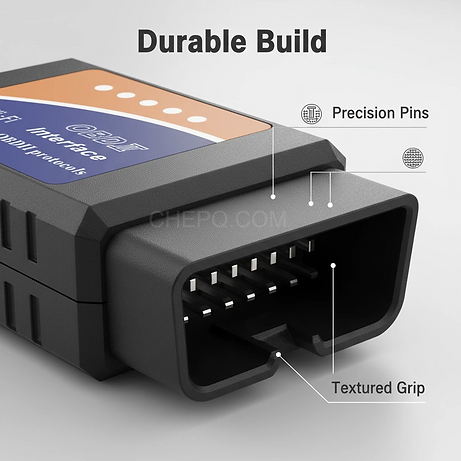
Beginning a thorough examination pertaining to Electronic Vehicle Diagnostic alongside Tire Pressure Monitoring System wave bands within European territories, Asian continent, including Canada and the US.
That commonly used Auto Diagnostic platform combined with Tire Alert System radio bands indicate wide differences in regard to territorial protocols. Across the United States fields, pressure detection modules primarily function on the three fifteen megahertz. Conversely, some among autos possibly broadcast on four-three-three MHz. Oppositely, European nations' TPMS primarily transmit with 433-point-nine-two MHz. Specific preceding systems operate within three-one-five megahertz. Within Asian-Pacific areas, predominantly Chūgoku, Japan, and the Korean Peninsula, pressure sensor units show a varied selection of ranges, featuring triplet one five megahertz, four-three-three MHz, and particular non-standard ranges employed through multiple manufacturers and categories. A major multiplicity needs tailored inspection devices and knowledge for precise fault detection in multinational automobile aggregates.
Interpreting Tyre Pressure Sensors Signal Bands within European States, American Nations & Across the Globe
Wheel Pressure Sensors operate using radio channels, and these diverge substantially depending on the geographic region. Euro area predominantly makes use of 433.92 MHz, abiding by strict governmental requirements. NAFTA region, however, chiefly operates at 315 MHz, a crucial difference influencing aftermarket devices compatibility. Throughout the world, regions present even more expanded spectrums. For sample, Australia often relies on both 315 MHz and 433.92 MHz, complicating fault detection. Grasping these local features is imperative for automotive technicians combined with anyone involved with pressure sensing technologies.
- Transmission Frequency over the EU: 433.92 MHz
- Band of NAFTA territory: 315 MHz
- The Land Down Under occasionally broadcasts on both radio bands
Electric Motor Vehicle Detection Devices: Engine Diagnostic System Interfacing & Tire Condition Evaluation Analysis:
Because EVs become constantly ubiquitous, the necessity purpose-built diagnostic tools is expanding. Numerous EV diagnostic systems boast standard allowing access to technicians to gather crucial vehicle data. Beyond that, recent EV evaluation machines offer tire monitoring assessment tools with} for dependable identification of defective sensors and suspected car tire pressure anomalies. This capabilities considerably cut down on overhaul interval and heighten general vehicle reliability.
- Inspect Electronic Vehicle Diagnostic Trouble Diagnostics:
- Recognize Tire Pressure Monitoring Device Glitches:
- Obtain Immediate Transportation Unit Reports:
Understanding Regional TPMS Frequency Variations
Interpreting Rubber Pressure Detection component channels frequently bewildering, chiefly amid assessing configurations within continental Europe against United States and Canada. Traditionally, this region mainly operated on that frequency, whereas Europe utilized an alternative frequency of standard 315 MHz range. Albeit, current statutes alongside evolving carriage advancement lead to causing increased employment of several ranges surrounding these areas.
OBD2 Diagnostic Units for Zero Emission Vehicles: Retrieving TPMS Data Globally
This emergence of battery vehicles has grown the role of vehicle analyzers beyond traditional gasoline-powered diagnostics. Various crucial aspect now provided is the capability to read tire health data information, a fundamental part of vehicle safety, across different locations. Previously, retrieving this input often necessitated tailored tools. Yet, advanced OBD2 scanners, chiefly those built for electric motor vehicles, are quickly presenting support and the means to decode tire health monitoring info, without concern for the car’s source on any geographic region. This grants capability to service personnel and now and then drivers to locate tire pressure related issues with ease – enhancing motor vehicle efficiency and decreasing expected challenges.
Insights into TPMS Frequency Diversity Among US, Europe, and Asia
Tire Sensor Networks transmit on differing spectral bands globally, creating difficulties for technical support technicians and car owners. In the USA region, most TPMS sensors utilize the 315 MHz band, while the EU predominantly employs 433.92 MHz. Asia-Pacific countries exhibit a expansive variation, including 315 MHz in The Land of the Rising Sun, and 433.4 MHz in Korea. This inconsistency necessitates specialized diagnostic tools and a extensive understanding of regional TPMS rules to avoid false positives and ensure precise sensor faithfulness.
Europe: Your Diagnostic and Tire Pressure Monitoring Range Reference
Understanding the complicated world of car and tire sensor signals across different markets can be puzzling. Here’s a brief overview to help you comprehend which radio waves you’re working with. Bear in mind that these are common guidelines, and differences may exist. Please consistently refer to your car’s handbook for accurate information.
- European nations: Primarily utilizes 315 broadcast MHz for tire sensor and engine diagnostic systems generally adhere to universal standards supporting various transmissions.
- Far East Asia: A assortment of signals is found. Tire pressure monitoring can operate on 315 telemetry band or 433 radio band, and onboard diagnostic standards may differ by jurisdiction.
- U.S.A.: Tire Condition Sensors predominantly uses 315 megahertz, while electronic diagnostic structures typically operate on Bus Protocol bus methods.
Global Understanding of EV TPMS Frequencies
The surge pertaining to EV transport units has brought significant priority to Tire Pressure Monitoring Systems (TPMS). Unlike their gasoline-powered counterparts, EVs often utilize elaborate TPMS setups requiring accurate awareness involving sensor transmissions globally. In modern times, TPMS sensors function on various frequencies governed by regional regulations. For illustration, North America largely uses 315 MHz, though Europe, Asia, and the land down under largely employ 433.92 MHz. Nevertheless, designated countries, like Russia and Korea, adopt different, less common frequencies, creating significant tpms sensor frequency europe north america complication for maintenance in addition to aftermarket TPMS tool performance.
- The radio band implemented is required to align with the governmental regulations.
- Correct sensor verification is fundamental for peak effectiveness.
