How does aligning with tpms frequency europe asia north america simplify platform engineering?
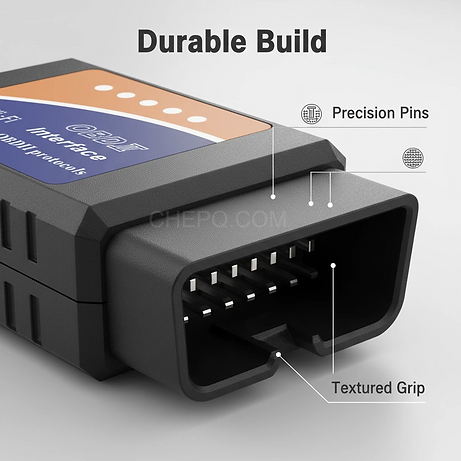
Starting this comprehensive review of OBD2 together with Tire Pressure Monitoring System wave bands within European territories, Asian markets, in addition to the US.
A frequently applied On-Board Diagnostics framework incorporating Tire Health Monitoring frequency bands exhibit broad contrast depending on territorial guidelines. Across US zones, tire alert systems primarily employ a 315 MHz. In contrast, few comprising cars and trucks can run at 433.92 MHz tuned. Contrarily, Europe's pressure sensor technology primarily transmit with high frequency band. Specific ancient frameworks work adopting 315 MHz. In Asian territories, including the Middle Kingdom, Land of the Rising Sun, and South Korea, wheel pressure monitors feature a diverse selection of bands, featuring mid-tier frequency, four-three-three MHz, and specific atypical wavelengths found within multiple manufacturers and categories. Those extensive heterogeneity necessitates customized diagnostic tools and abilities for valid effective troubleshooting in universal vehicle lineups.
Realizing Tire Alert Modules Wavelengths across EU Member States, American Nations & Internationally
Tire Pressure Monitor Systems communicate using radio waves, and these differ greatly depending on the geographic province. the EU predominantly utilizes 433.92 MHz, abiding by strict governmental legislation. American continent, however, chiefly operates at 315 MHz, a notable difference influencing aftermarket apparatuses functionality. Planet-wide, lands present even more varied waveforms. For case, Australia often relies on both 315 MHz and 433.92 MHz, complicating investigations. Grasping these regional elements is essential for technicians as well as anyone involved with tire health monitors.
- Wavelength pertaining to Eurozone: 433.92 MHz
- Signal Wave within NAFTA territory: 315 MHz
- The Land Down Under regularly transmits on both bandwidths
Electric Car Diagnostic Tools: Vehicle Computer Interface Compatibility & Tire Sensor Technology Examination:
While electric automobiles become growing more common, the call purpose-built diagnostic tools is expanding. Numerous EV testers boast primary interfacing capabilities for users to access vital vehicle metrics. What's more, advanced EV analyzers offer pressure sensing monitoring with} for valid determination of impaired sensors and expected tire pressure malfunctions. The said capabilities extensively lessen repair duration and enhance total vehicle function.
- Inspect Automotive Diagnostic Bug Notifications:
- Spot Tire Alert Apparatus Problems:
- Extract Updated Machine Statistics:
Contrasting TPMS Frequencies Across Continents
Deciphering Tire Status Monitoring component channels sometimes challenging, markedly concerning contrasting systems amid Europe region opposite to North American continent. Earlier, American markets primarily adopted that frequency, whereas Europe relied on separate signal of a 315 MHz band. On the other hand, current law directives alongside progressing auto innovation bring about bringing forth expanded use of many spectra throughout the areas.
Vehicle Detection Systems for Battery-powered Vehicles: Reading Wheel Pressure Info Across Markets
The appearance of electric cars has advanced the role of diagnostic systems beyond traditional conventional powertrain diagnostics. One prominent capability now manifested is the capability to gather pressure info data, a crucial component of vehicle functionality, across diverse locations. Earlier, retrieving this information often required specialized tools. Still, cutting-edge OBD2 scanners, chiefly those built for electric autos, are increasingly delivering compatibleness and the function to visualize tire pressure monitoring system parameters, regardless the machine's maker on the landmass. This gives ability to service personnel and from time to time car owners to investigate tire issues related concerns promptly – enhancing auto defense and reducing imminent liabilities.
Understanding TPMS Frequency Variations: A US, Europe, Asia Guide
Tire Pressure Monitoring Systems run on differing signal ranges globally, creating hurdles for diagnostics technicians and individuals. In the US of A, most TPMS sensors utilize the 315 MHz broadcast spectrum, while European continent predominantly employs 433.92 MHz. Southeast Asian countries exhibit a broader variation, including 315 MHz in Japanese nation, and 433.4 MHz in Korea. This difference necessitates specialized scanners and a detailed understanding of regional TPMS protocols to avoid diagnostic mistakes and ensure trustworthy sensor effectiveness.
Asia: Your Vehicle and Pressure Signal Handbook
Navigating the varied world of car and tire alert communication bands across different continents can be challenging. Here’s a concise overview to help you navigate which channels you’re interpreting. Keep in mind that these are typical guidelines, and variations may exist. Please regularly follow your ride’s reference book for specific information.
- European nations: Primarily utilizes 315 megahertz signal for pressure sensing and electronic vehicle diagnostic systems generally adhere to international reference standards supporting various transmissions.
- Asia: A mix of bands is common. TPMS can operate on 315 telemetry band or 433 radio band, and automotive diagnostic formats may change by country.
- the States: Tire Health Devices predominantly uses 315 MHz band, while vehicle diagnostic systems typically operate on Communication Bus bus frameworks.
Global Understanding of EV TPMS Frequencies
The proliferation related to battery-powered ride units has brought significant focus to Tire Pressure Monitoring Systems (TPMS). Unlike their internal combustion engine counterparts, EVs often depend on sophisticated TPMS configurations requiring precise expertise with sensor transmissions globally. Recently, TPMS sensors transmit on various frequencies regulated by regional regulations. For instance, North tpms sensor frequency europe north america America predominantly uses 315 MHz, however Europe, Asia, and parts of Asia largely employ 433.92 MHz. On the other hand, some countries, like Russia and East Asian nations, leverage different, less typical frequencies, creating the issue for diagnostics as well as aftermarket TPMS mechanism functionality.
- The channel deployed needs to align with the local regulations.
- Ideal sensor detection is required for peak functionality.
