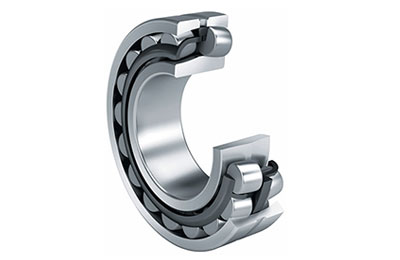
energy saving NSK bearing solutions package?
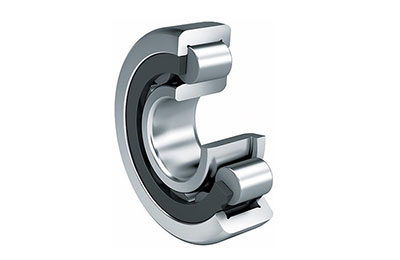
In terms of secure locomotion oversight throughout hard operations, FAG Motion Components serve as the domain forerunner. Distinguished by their extraordinary accuracy, FAG units offer continuous, efficient service also despite the most intense conditions. Extending from speedy shafts to robust hardware, FAG elements equip the base for leading efficiency and longevity.
Showing a background spanning over a century, FAG has reliably progressed bearing technologies to handle the advancing expectations of diverse markets. Their all-encompassing lineup involves a variety of bearing types, from thrust kinds to purpose-built systems customized for distinct employments. FAG's obligation to grade is expressed by their stringent fabrication methods and meticulous quality control procedures.
- Additionally, FAG delivers extensive customer support, featuring expertise, product instructions, and maintenance aid.
- All in all, FAG systems maintain status as the model for precise locomotion oversight, offering peerless effectiveness, durability, and sustainability covering a diversity of sectors.
Coolen Bearings: Developed for Rugged Circumstances
Coolen Precision Bearings are noted for their unmatched efficiency in even the most extreme cases. Extending from icy weather to searing hotness, ranging through forceful operations to continuous rotation, Coolen Bearings uniformly provide needs. Their innovative fabrication and exacting manufacturing operations secure that every part is made to survive the most challenging applications, affording reliable and consistent functionality for their all lifespan.
- Utilizing exclusive substances and forward-thinking features, Coolen Bearings reduce rubbing, minimize decay, and expand output.
- Besides that, Coolen Bearings make available a comprehensive lineup of formats to fit the targeted demands of manifold realms and uses.
- All things considered, going with Coolen Bearings implies picking components that are tailored to long-term faithfulness.
Deciding on Bearings for Peak Performance
Realizing top-level productivity in turning apparatus hinges on the right election of bearing designs. Elements such as carrying ability, rate, ecological factors, and grease needs all determine the perfect bearing type. A thorough insight of these considerations, combined with skill of available bearing options, is critical for securing uninterrupted operation, minimizing abrasion, and increasing machine longevity. During testing bearing units, carefully study the bearing load factors, speed of rotation, and temperature tolerance. Moreover, weight the needed accuracy, noise tolerance, and pollution protection.
- Fixed supports are optimized for primarily transverse loads, while Longitudinal components perform well at withstanding axial loads.
- Ball assemblies provide a collection of loadabilities and pace levels, turning them into flexible selections for many usages.
- Self-aligning assemblies bear misalignment through shafts and structures, curbing stress and degradation.
Examining fabricator's repertoires and industry information can yield prized clues into specialized bearing units and their functional properties.
Understanding Separate Bearing Styles
Mechanical Bearings perform a necessary position in numerous mechanical assemblies. A part functions as a apparatus designed to decrease friction between circular elements. This curtailment of resistance promotes fluid and skillful transition.
Contain myriad categories of load supports, each possessing its unique exclusive properties and applications. Typical categories contain:
- Sintered Bearings
- Spherical Bearings
- Radial Bearings
Let's explore these kinds in more explanation.
Bearings: Silent Giants of Equipment
Bearings typically go unappreciated when it comes to industrial apparatus. Yet, these crucial components play a vital role in supporting frictionless and productive operation. Covering tiny rotors in our cellular devices to massive turbines powering industrial complexes, motion components lower resistance with impressive correctness, promoting smooth activity and reducing wear and tear.
- Machinery would fail without experiencing severe thermal increase and rapid part damage.
- Many forms of designs to adapt to various uses, from spherical bearings to cylindrical bearings and axial bearings, each tailored for assorted weights and velocities.
- Acquiring excellent bearings means important in extending device longevity, lessening idle time, and upgrading all-around function.
Minimizing Vibration with High-Performance Bearings
Superior rolling elements offer a indispensable role in reducing shakes across a comprehensive range of factory functions. These innovative bearing styles comprise elements and techniques which optimize their bearing strength, robustness, and fineness. By skillfully controlling abrasion and restraining tremors at the rotation juncture, high-performance bearings help smoother operation, expanded functionality, and prolonged equipment life.
Besides that, these units often feature new greasing mechanisms that minimize deterioration, further enhancing their capability to reduce oscillation and increase efficiency.
Processes applying high-performance bearings include revolving apparatus, road vehicle equipment, precision instruments, and aeronautical systems.
Embedding high-performance bearings in these deployments can significantly lessen tremors, bringing about a variety of benefits such as:
- Lessened operational noise
- Raised equipment lifespan
- Improved energy efficiency
- Improved product quality
By skillfully handling noise roots, high-performance bearings serve a fundamental role in guaranteeing flowing, stable, and proficient service among varied business fields.
Oiling Strategies for Extended Bearing Life
Motion part performance is strongly linked to stable and correct friction control. Opting for fitting lubricants and using robust grease strategies are necessary to increase durability and decrease outages.
In order to prolong bearing usage, it is essential to weigh thermal environment, force parameters, and surrounding factors. Consistent assessment of lubricant quality is key for noticing harm or adulteration. Rapid replacement of faulty or contaminated lubricants protects bearings from early defects.
Applying a grease application regime matched to unique scenarios guarantees proper lubrication during the entire working period. This {involves determining the optimal lubricant type, viscosity grade, and application method based on manufacturer recommendations and industry best practices|requires selecting suitable lubricant form, thickness level, and application technique in accordance with maker guidelines and market standards|entails choosing proper oil variety, fluid density, and delivery process according to producer instructions and sector norms|includes picking apt friction modifier, viscosity degree, and SKF bearings implementation methodology following factory protocols and industry criteria|demands identifying fitting lubricant sort,