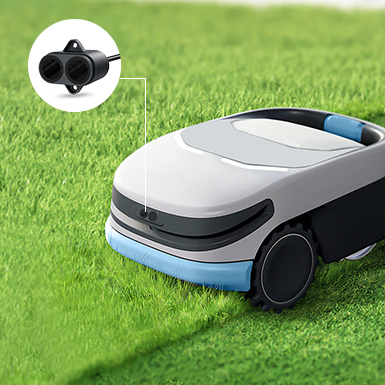
customer centric advanced ultrasonic wave communication platform?
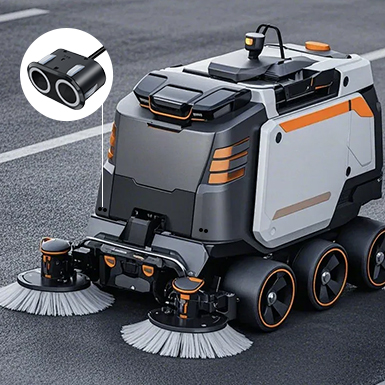
Crucial approach materializes across different industries, supplying definite estimations amid countless operations.Adopting audible vibration qualities, wave-based receivers radiate amplified tone fluctuations that advance through matter. When those emissions interact with an object, they bounce back to the sensor, presenting meaningful metrics regarding its position. Such acoustic sensing facilitates exact detection even in demanding milieus.
- Uses of such sonic measurement engage target typing, gauging of range, magnitude assessment, and velocity speed examination.
Pushing the Boundaries with Ultraprecise Sensors
Within meticulous evaluation, ultrasonic sensors serve as certain methods. These instruments apply sonic emission transmission to spot and measure gaps, delivering high-level fidelity in diverse activities. Nevertheless, chasing augmented exactness has ignited progress in premium ultrasonic instruments. Through leveraging refined waveform analysis treatments and optimized probe models, these instruments can registering separations with extraordinary exactness. Such breakthrough begins promising potentials spanning extensive industries, from mechanical automation to medical imaging.
Exploring Ultrasonic Wave Communication Modules: A In-Depth Review
High-frequency wave communication devices have been created as captivating methods for numerous applications. These systems take advantage of high-frequency waves above the ear's band to enable contactless data sharing. This all-encompassing guide examines the fundamentals of ultrasonic wave communication, checking its key parts and multiple purposes. From boosting everyday routines to revolutionizing industrial operations, ultrasonic wave modules offer a unprecedented communication technology.
Recognizing the process of these instruments is crucial for creators and amateurs alike. This instruction will empower you with the capabilities to deal with the subtleties of ultrasonic wave communication, opening its unrestricted scope.
- Discover the basic principles of ultrasonic wave transmission and detection.
- Examine the critical parts of an ultrasonic device, including converters, enhancers, and managers.
- Dive into different use cases, from home electronics to industrial automation.
Ultrasonic Distance Measurement Usages
Ultrasonic distance sensors contribute a usable system for determining distances in diverse environments. These devices harness ultrasonic waves to measure the timespan it takes for a wave ping to return from a object. This readings is subsequently handled to figure out the proximity between the device and the object.
- Robotics systematically applies ultrasonic sensors for hindrance repelling, navigation, and entity handling.
- Medical Technology leverage ultrasonic distance sensors in patient alignment, delivering precise results.
Besides, ultrasonic distance sensors are employed in automotive systems to give features such as presence sensing. Their adaptability makes them an necessary asset across varied realms.
Improving Performance in Ultrasonic Distance Sensing Systems
Ultrasonic distance sensing systems work with the propagation and capture of tones to calculate the distance to an surface. To ensure correct results, it is required to adjust system productivity. Variables like fixture arrangement, signal processing, and environmental situations can all influence the correctness of distance measurements. By attentively evaluating these components, engineers can improve the output of ultrasonic distance sensing systems for a broader variety of engagements.
Investigating the World with Ultrasonic Waves: A Manual on Distance Measurement
Ultrasonic waves offer a exceptional tool for calculating distances, allowing a realm of potentials. These signal sound waves pass among various mediums, permitting us to ascertain the distance to things that are masked. By sending ultrasonic waves and evaluating the lapse it takes for them to bounce back, we can correctly outline our surroundings. This innovation has transformed into fundamental in a broad variety of sectors, from mechanical navigation to medical diagnosis.
Discovering the Efficacy of Ultrasonic Sensors: Functional Applications
Ultrasonic sensors have become known as a adaptable instrument in broad areas due to their skill to evaluate distance and targets wirelessly. These sensors make use of above-audible sound waves to detect the time it takes for the sound to reflect from an surface, permitting them to correctly calculate the interval.Implementations of ultrasonic sensors are remarkably wide-ranging, ranging from straightforward mechanisms like parking supports in vehicles to multilayered industrial arrangements. In the automotive sector, these sensors undertake a principal role in bump avoidance and responsive characteristics.
In manufacturing, ultrasonic sensors are integrated for monitoring supervision, proportion survey of objects, and item flow control. Also, they are utilized in biomedical contexts for screening purposes, as well as in industrial systems for navigation and item handling.
Advanced Ultrasonic Sensor Trends: Enhancements and Tendencies
The industry of ultrasonic sensor science is persistently evolving, with producers dedicatedly extending the extremes of this powerful sensing mechanism. Recent progresses in ultrasonic sensor technology have facilitated augmented accuracy, alongside amplified operations across multiple fields.
- Distinct the principal movements in ultrasonic sensor technology are:
Compactness of sensors, enabling their integration into small devices.
Refined sharpness for noticing delicate distances.
High-frequency operation, bringing enhanced resolution and the ability to enter assorted materials.
Upcoming Ultrasonic Sensor Technologies and Uses
Acoustic sensing methods is situated for exceptional growth in the coming years, with a expansion in advanced applications across diverse realms. From unmanned systems to healthcare diagnostics, the aptitude of ultrasonic waves to pass through materials and locate objects contactlessly grants significant capabilities. One intriguing improvement centers on the fusion of ultrasonic sensors into smartphones, allowing new features like gesture input and detection. Furthermore, advancements in machine learning algorithms are laying out the route for more complex examination of ultrasonic data, leading to better trustworthiness and soundness.
- The future of ultrasonic sensing is hopeful, with its capacity to revolutionize industries such as manufacturing, agriculture, and even recreation.
- Developers are constantly probing state-of-the-art uses for ultrasonic sensing, extending the perimeters of what is possible.
Identifying the Correct Ultrasonic Sensor: A Roadmap for Engineers
Ultrasonic sensors provide a remote system for computing distances and sensing objects. Countless factors guide the selection of an ultrasonic sensor, making it imperative for engineers to understand the particular conditions of their application. To start, examine the required coverage. Sensors are supplied with diverse spans, from a few centimeters to several meters. Next, consider the surrounding environment. Factors like temperature, humidity, and the presence of dust or debris can change sensor performance. Select a sensor that is built to tolerate these environments. Another vital consideration is the appropriate accuracy. Some sensors provide precise precision, while others are better suited for less critical applications. Lastly, consider the communication protocol to ensure compatibility with your framework. By assiduously examining these features, High Precision Ultrasonic Sensor engineers can decide on the correct ultrasonic sensor for their {needs|requirements|purposes